Safety & Workshop
Stone Vise
Holds the block so both your hands are free to work it.
Specifications
| Jaw width | 100 – 250 mm |
|---|---|
| Jaw opening | 150 – 300 mm |
| Jaw liners | Wood, leather or rubber — never bare steel |
| Mounting | Bolted to the bench, or free-standing floor stand |
| Rotation | Swivel base is worth the cost |
| Load | Matched to your typical block size |
| Best for | Detail work, lettering, small to medium blocks |
Technical parameters
| Material | Cast iron or steel body, soft jaw liners |
|---|---|
| Stone suitability | All stone types; essential for small work |
| Stage | Refine and detail |
| Pairs with | Workbench, riffler file, lettering chisel |
| Maintenance | Grease the screw; replace worn liners |
| Never | Clamp a finished or fragile piece without soft padding |
SafetyRefine Finish
Overview
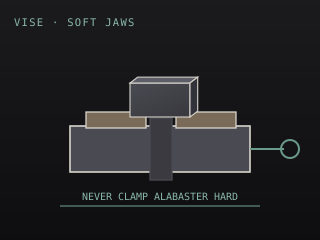
A vise sized for stone rather than metal, with wide jaws that grip a block without crushing its edges. Its purpose is to free both hands and remove the need to steady the work with your holding hand — which is where a slipped chisel does its damage. Soft jaw liners are essential, since a metal jaw will spall a stone edge.
Using it
- Line the jaws with wood or leather. Bare steel jaws will crush a stone arris.
- Tighten until the block is immovable, then a quarter turn more. Not more than that.
- A swivel base pays for itself the first time you need to reach the back of a piece.
- For delicate work, support the block on foam and clamp only lightly, or use a sandbag instead.
Safety notes
- A stone under jaw pressure can crack. Pad the jaws and tighten only until the block stops moving.
- Never clamp alabaster or a thin section hard — it will fail without warning.
- A vise that is not bolted down becomes a lever the moment you apply force to the work.
Works with
Educational reference only. Figures marked typical are conventional workshop ranges, not manufacturer specifications. This site sells nothing and endorses no brand. Working stone produces respirable crystalline silica — control the dust at the source, and check your local regulations, which may be stricter than the general practice described here.
Related safety
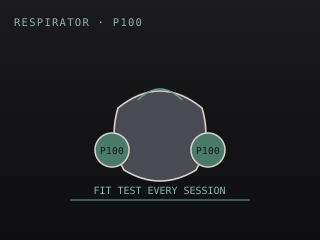
Respirator
The single most important piece of equipment in a stone studio.
SafetySelect · Rough Out · Refine · Finish
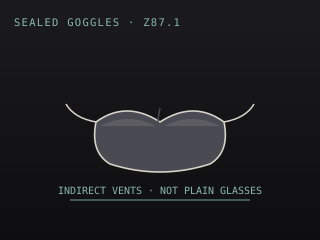
Safety Glasses
Sealed goggles, not fashion glasses, for impact and dust.
SafetySelect · Rough Out · Refine · Finish
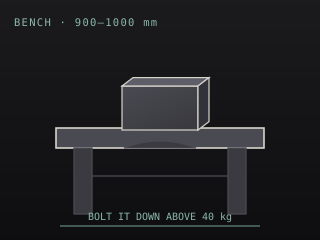
Workbench
A heavy bench that absorbs the blow instead of bouncing it back.
SafetySelect · Rough Out · Refine · Finish · Seal