Finishing & Polishing
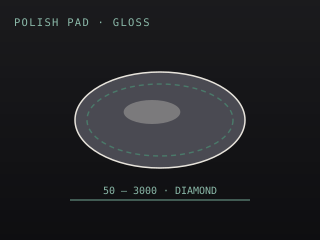
Polishing Pad
Diamond or felt pads that bring the surface to a true polish.
Specifications
| Grit range | 50 to 3000 (diamond pads), buffing for felt |
|---|---|
| Diameter | 75 – 125 mm, or hand pads 90 × 55 mm |
| Type | Diamond-impregnated flexible, or felt/leather |
| Compound | Tin oxide or cerium oxide for felt pads |
| Use | Wet for diamond, dry for felt |
| Life | Long for diamond, short for felt |
| Best for | Final polish and gloss development |
Technical parameters
| Material | Diamond-resin bond, or compressed felt/leather |
|---|---|
| Stone suitability | Marble, granite, limestone, alabaster, soapstone |
| Stage | Finish — final polish |
| Pairs with | Sandpaper, wax, water |
| Maintenance | Rinse diamond pads; do not let slurry dry in them |
| Never | Use a coarse pad after a fine one — it undoes the work |
FinishingFinish
Overview
The final stage before wax or sealant. Diamond-impregnated flexible pads, or felt and leather pads charged with a polishing compound, take the surface from a fine matte to a genuine reflective polish. On hard stone, diamond pads do the work; on softer stone, felt and a compound are gentler and easier to control.
Using it
- Do not begin polishing until the 1500-grit surface is perfect. Polish only reveals what is already there.
- Use progressively finer pads without skipping, exactly as with paper.
- Keep diamond pads wet. Dry diamond pads glaze and stop cutting.
- A true polish on marble requires a felt pad and tin oxide after the diamond sequence.
Safety notes
- Polishing generates fine slurry and, with power tools, heat. Wet the work and take breaks.
- Diamond pads on a power tool can catch an edge and snatch. Keep a firm grip and low speed.
- Felt compounds can be irritant. Gloves.
Works with
Marble blockGranite blockLimestone blockWaxSandpaper
Educational reference only. Figures marked typical are conventional workshop ranges, not manufacturer specifications. This site sells nothing and endorses no brand. Working stone produces respirable crystalline silica — control the dust at the source, and check your local regulations, which may be stricter than the general practice described here.